Known for works of a political and feminist nature, Israeli artist Yael Bartana goes on to smoothly blend multiple themes in her recent project “Light to the Nations”–exhibited at The Center for Digital Art in Holon, south of Tel Aviv, Israel, earlier this year. Science and technology, religion and mysticism, national identity and economics are brought together to deliver a thought-provoking vision for the future, with the audience being given the opportunity to intellectually interact with the artwork and enrich the conversation.
The ambitious initiative begins with a note on the “Doomsday Clock” (developed by the non-profit The Bulletin of the Atomic Scientists in 1947 during the nuclear threat of the Cold War) that is a symbol for the likelihood of global human-made catastrophe in the wake of unrestrained scientific and technological advances. The metaphorical timepiece indicates how close we are to midnight, or world destruction. The main factors influencing the clock are nuclear risk and climate change. In 2023, the clock’s minute hand has moved, setting the clock at 90 seconds to midnight, and it is still ticking.
Nowadays, we are witnessing the privatisation of space and the accelerated development of the space industry. Due to advances in miniaturisation and reusable rocket technologies, this industry is expected to grow significantly in the coming decades, with the hope of leading humanity towards life in space. This development brings us closer to a science-fiction-like reality and is marketed as a solution for human existence. However, it is actually part of the problem, as it creates a divide between the ultra-rich and the rest of humanity and disregards moral restrictions.

“Light to the Nations” by Yael Bartana is a proposal aimed at saving humankind in the face of a global catastrophe that would extinguish any possibility of life on Earth. This proposal is influenced by post-apocalyptic science-fiction literature as well as a critique of today’s accelerated technological progress and a fear of the economic and political forces involved in it.
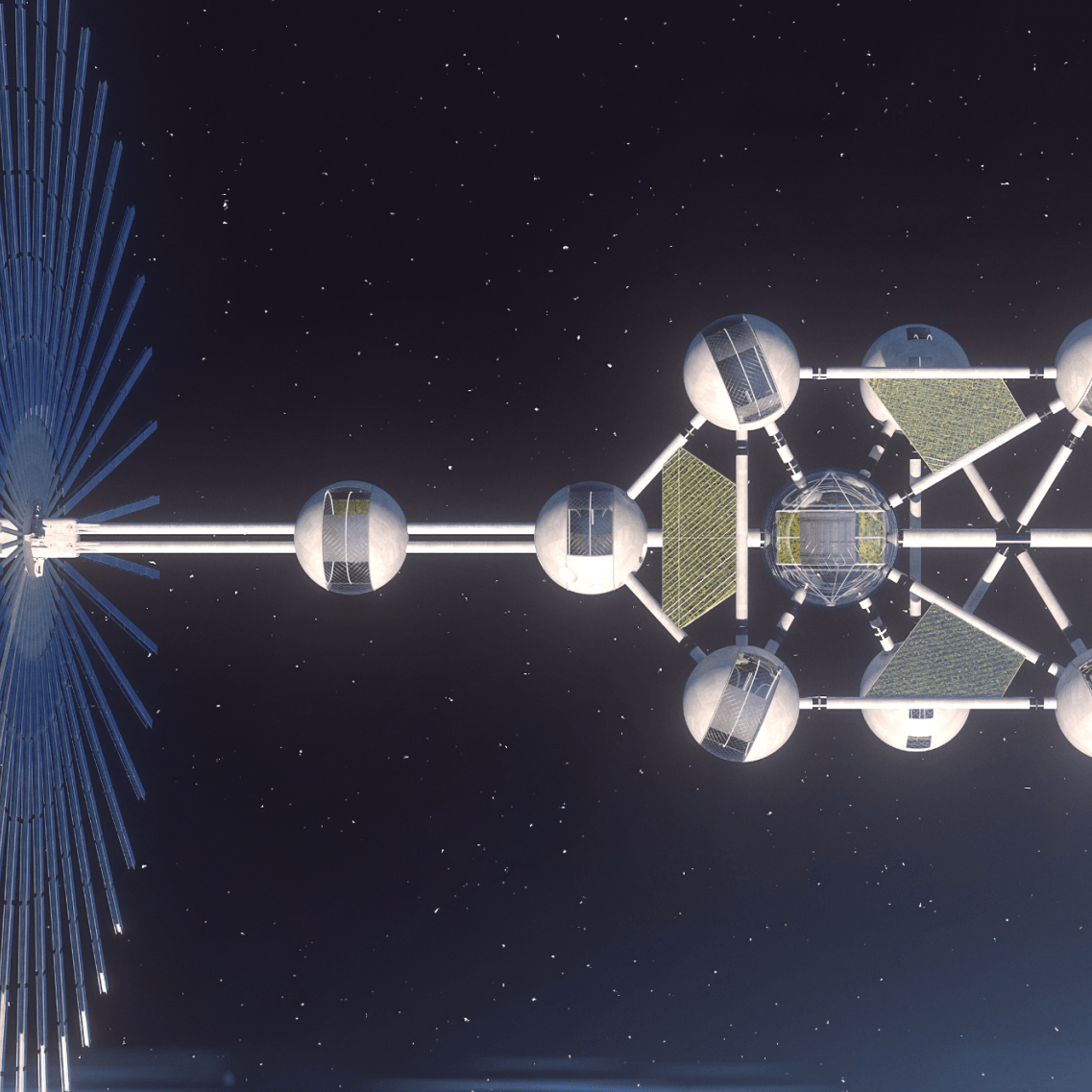
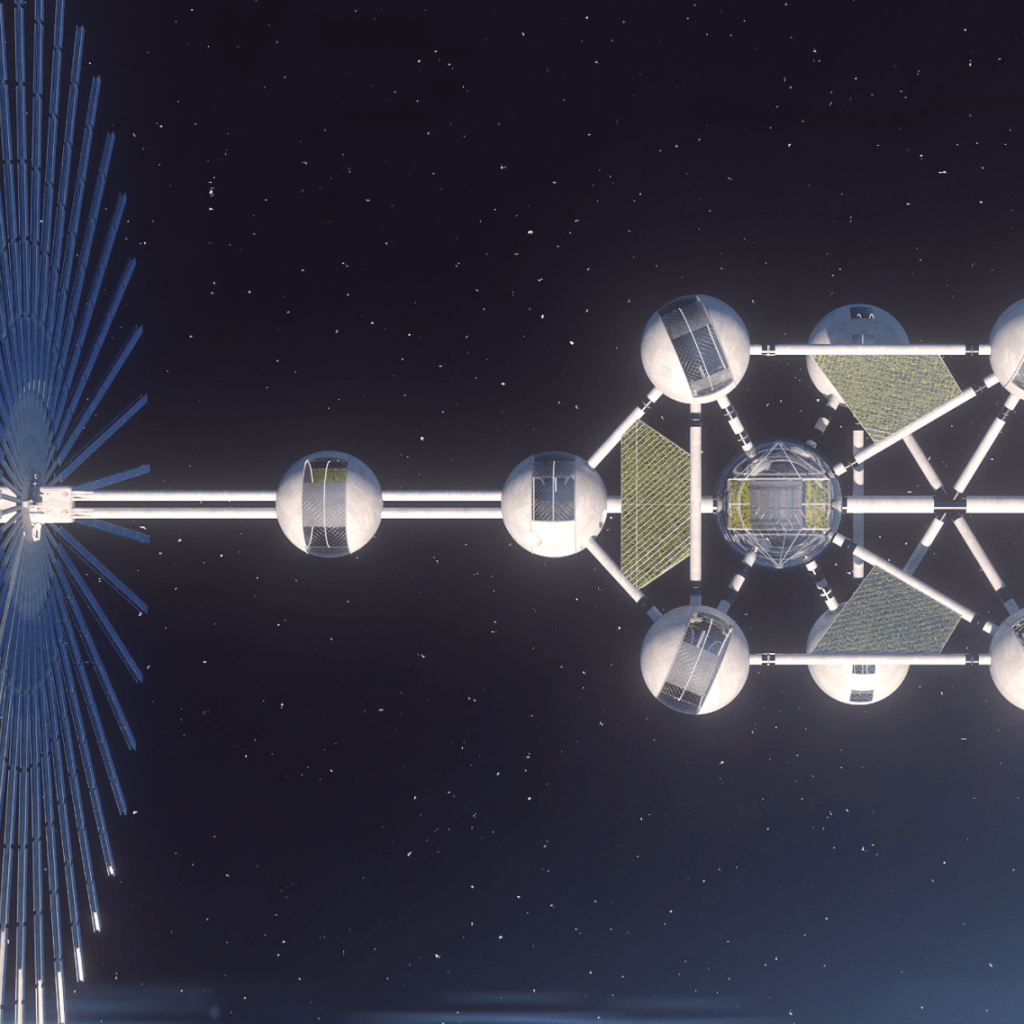
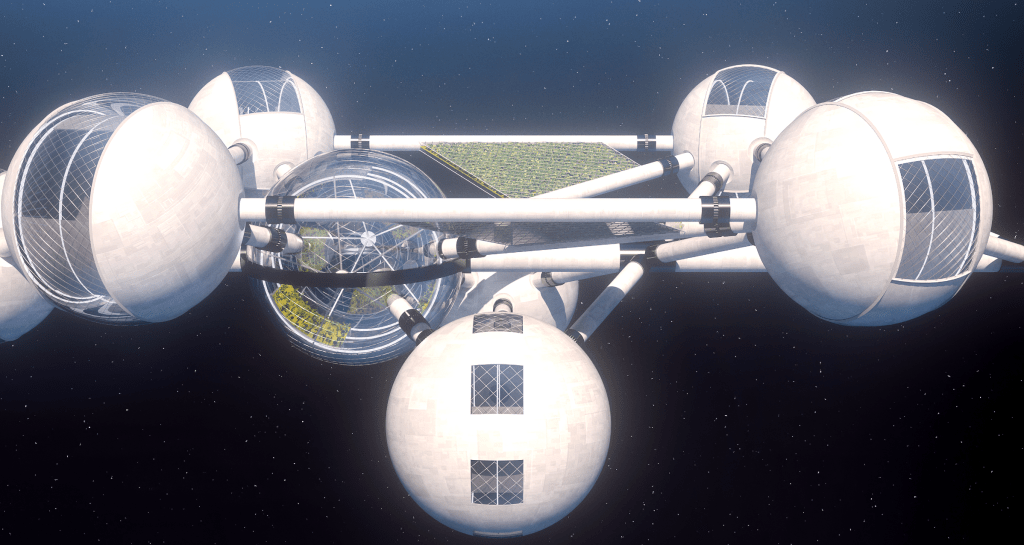
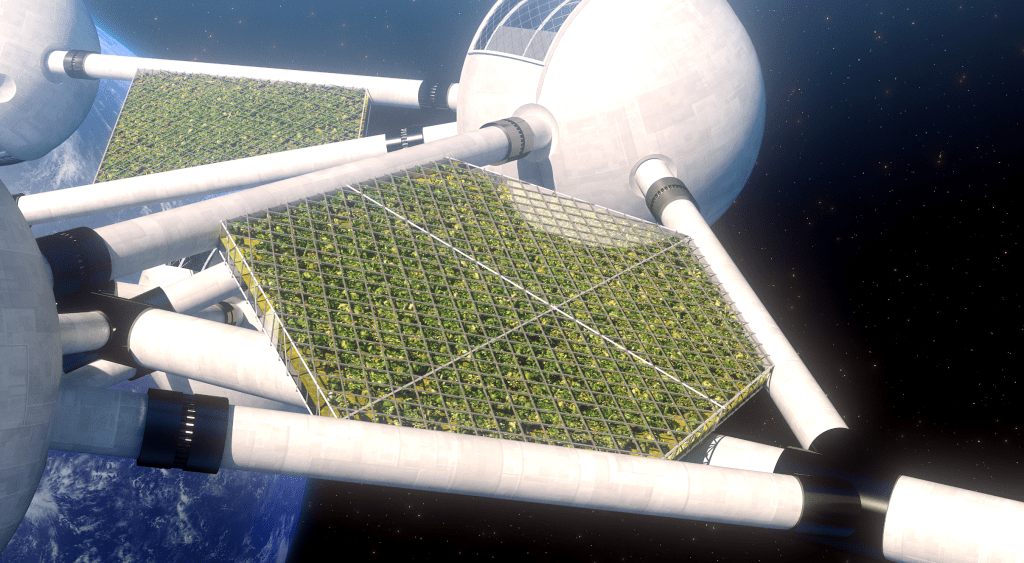
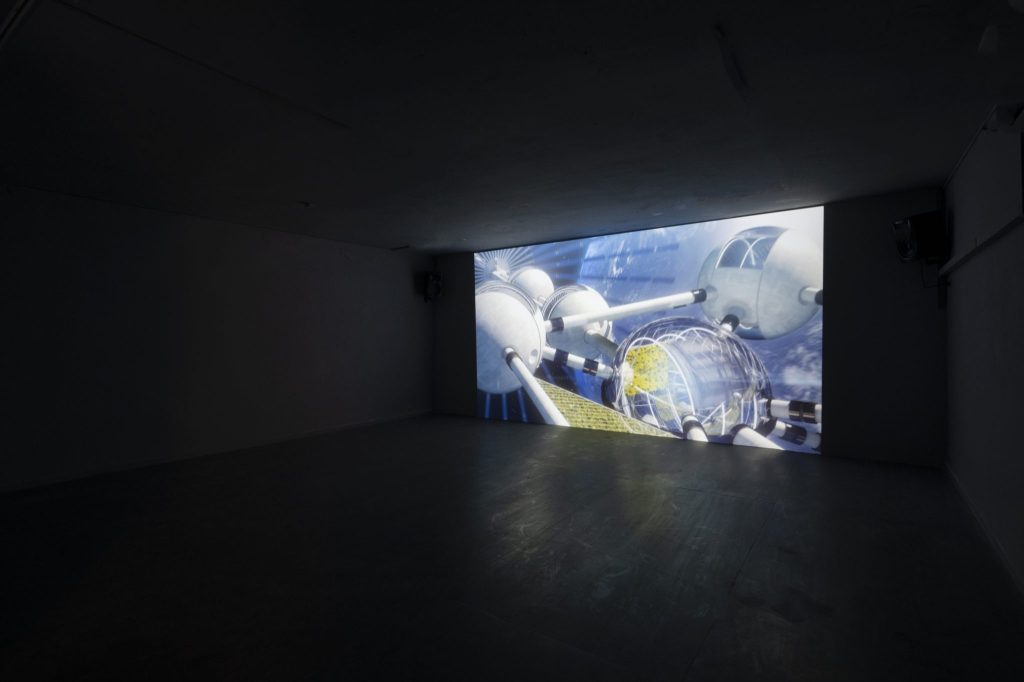
The title “Light to the Nations” points to the Jewish-Israeli context of the work and its connection to the historic and moral role of the Jewish people. At the heart of the work is the creation of a generation ship for Jews—a mothership that will lead humanity towards Tikkun Olam (lit. ‘the repair of the world’). This vessel is designed to host a large community for millennia and to travel far beyond our solar system. However, its ultimate goal is unknown: whether to inhabit a faraway planet, return to and populate Earth once it recovers, or travel endlessly, ever evolving, aboard this spaceship. The generation ship is seen as a project of the Jewish nation that will serve as the spearhead in repairing the world, an example for all nations to follow.
As the project evolved—through discussions with theorists, science-fiction connoisseurs, scientists, theologists, and space industry professionals—the futuristic science-fiction framework seemed well suited for observing and contemplating the changes in the future of humanity, its current problems, and the promise and/or threat of technological progress. Is a generation ship feasible? Where should or could it travel? How should the ship’s community function and organise itself? Who will its members be? And what about those left behind—people, places and things? These questions were vital in shaping the project, and they stimulated the imagination of every expert involved. The project thus presents a new perspective of futuristic opportunities for Jews and all of humankind. Yet, unlike in science-fiction literature, where concepts are organised in well-defined plots, Light to the Nations uses fragmented concepts to invite the audience to imagine many different alternatives.
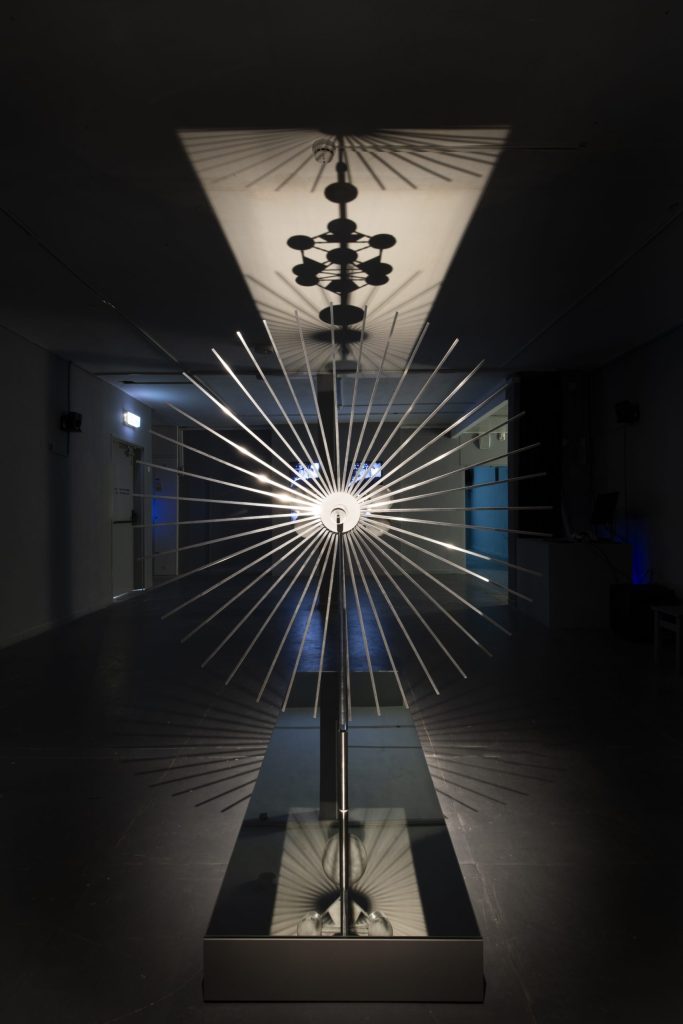
The structure of the generation ship is based on the Kabbalistic diagram of the Tree of Life, consisting of ten spheres (for the ten Sefirot; lit. ‘emanations’) that represent God’s aspects. This structure symbolises the ambition to create and sustain a wide range of human activities—personal, communal, and cultural-exploratory. The Kabbalistic influence on the ship’s design sets the concept of Tikkun Olam as the foundation of the ship’s community and its organizing principle. The ship’s structure emphasises the importance of establishing new relationships among its inhabitants for creating a new, rectified world beyond Earth. This is an invitation to think about Tikkun Olam, or the repair of the world, in two complementary ways: one addresses the social-human aspect, and the other refers to the physical world, namely Earth itself, which may recover in our absence. Therefore, the ship must sustain full and dynamic human existence, allowing its inhabitants to evolve, change, grow, develop technologies, and preserve and create culture.
The exhibition showcases different ideas and opportunities for creating a community, rituals and new and renewable culture. They explore the link between the material culture left behind and the new, evolving world, and represent our imagination about the next generations—what we want them to remember, how they might act, and how they might connect to their earthly past.
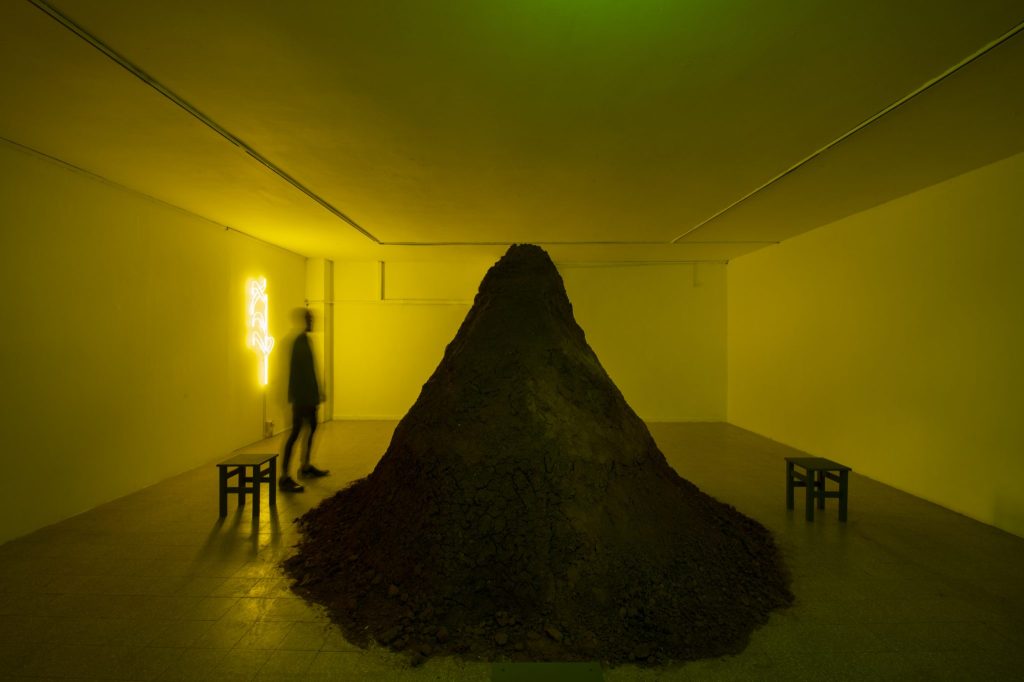
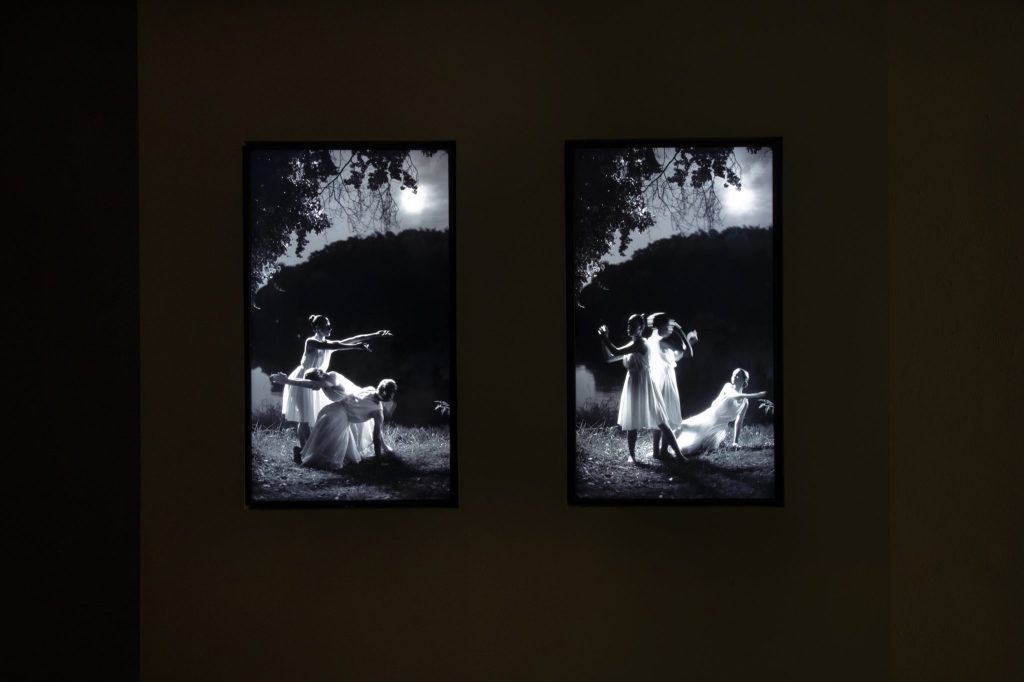
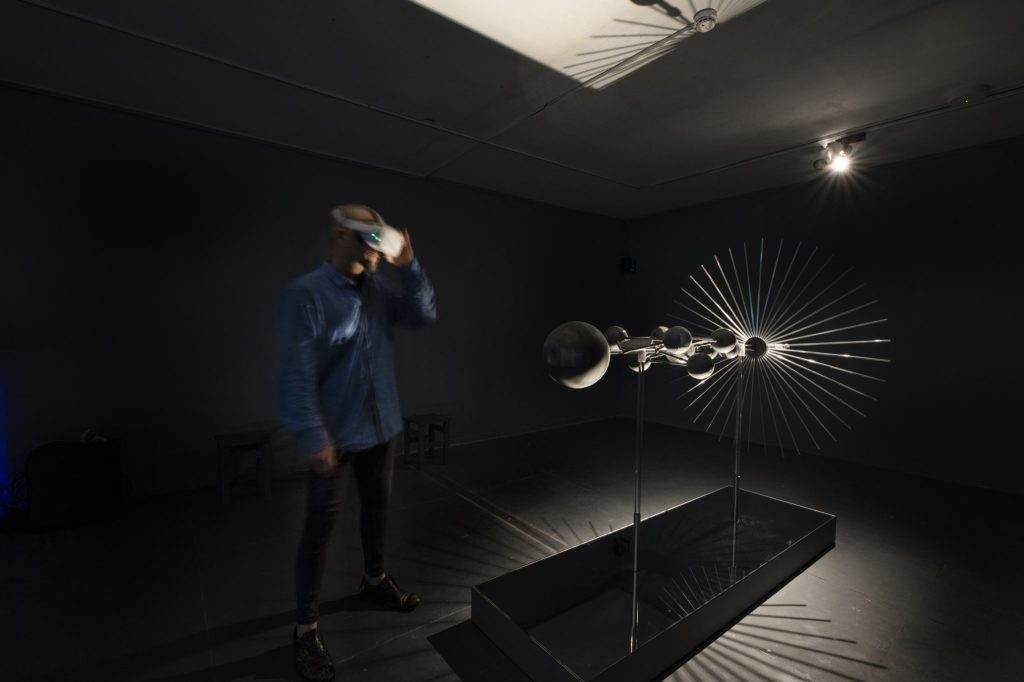
For instance, the soil mound at the centre of the room can be used as an area for worship and meditation, where people can contemplate their attachment to the land even in its absence; or the three videos of dance performances—which are based on Labanotation, a system for analysing movement that Rudolf von Laban developed in 1920s Germany—can be seen as social rituals designed to connect people to the land and nature. These multiplied renditions for a group of dancers acting as one organism express the desire for redemption. These ways of imagining the future attempt to preserve part of the past that would enable the new and frame it as an option or a warning about the danger of repeating history. The images of monuments, libraries, and habitats encountered in the VR experience also help preserve the memory and foundations of the community, or perhaps they are the remnants of lost cultures, the archeological artifacts of an almost forgotten society.
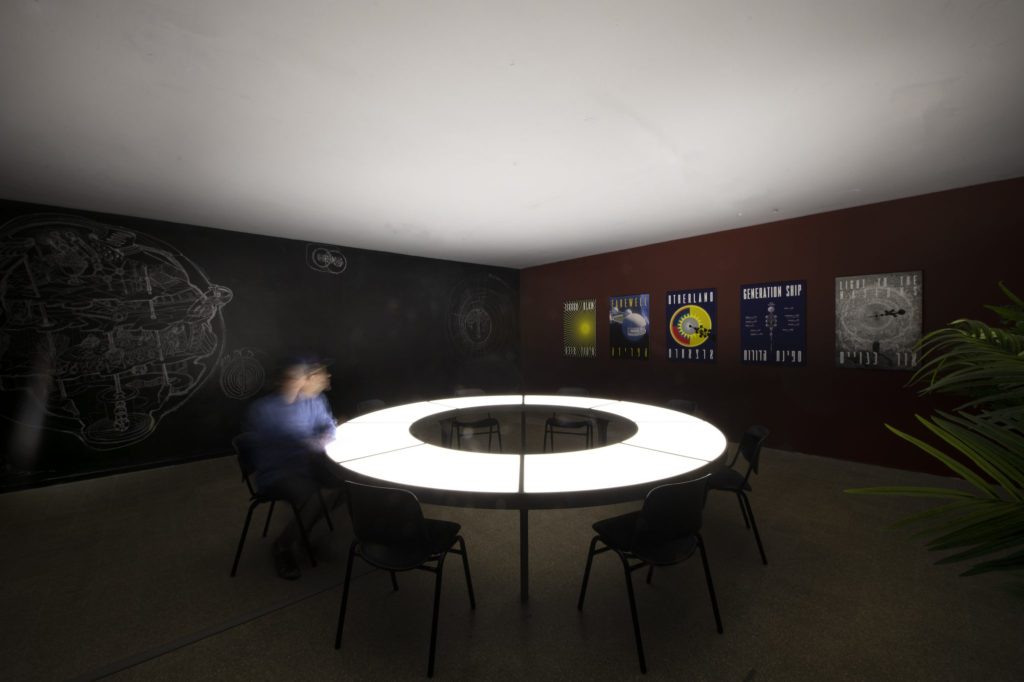
During the exhibition, workshops involving children, youth, experts, and researchers took place at a round table and served as a conceptual laboratory for exploring the potential social, theological and economic implications of the generation ship in a possible future. A collaborative conceptual development and the invitation to participate in the thought process are crucial for imagining this new community.
“Light to the Nations” proposes a redemptive idea for repairing the world and uses the political imagination as a platform for future possibilities, an act Yael Bartana terms pre-enactment. Through the generation ship, the artist creates an archeology of the future and a means to explore both the past and the present.
Links: Website (yaelbartana.com) | Instagram (www.instagram.com/yaelbartana)
.
.
.

 On Art and Aesthetics